Where ticks hide in Connecticut yards and how to manage them
The places ticks wait for a host
In Connecticut, the blacklegged tick is the species most people worry about. It carries Lyme disease and other illnesses, and its habitat overlaps closely with the suburban yards that make up much of the state's landscape. Ticks are not random wanderers. They wait in specific spots where conditions are right: enough humidity to keep them from drying out, shade from direct sun, and a steady supply of hosts such as mice, chipmunks, birds and deer. Understanding where ticks hide is the first step toward reducing your family's exposure.
Ticks do not live on lawns in the open. They prefer the edges and the undisturbed places where leaf litter accumulates and the sun rarely reaches. A well‑kept lawn is not their home; they are carried into it by animals or they crawl a short distance from cover. The real problem areas are the borders between your yard and the woods, stone walls, wood piles, gardens, and any spot with tall grass or dense ground cover.
The edge where yard meets woods
The single most common tick habitat in Connecticut is the ecotone, the transition zone between a maintained lawn and a wooded area. This edge is warm and humid, and it offers the cover ticks need to survive between blood meals. Deer and rodents travel along these edges, so ticks that wait there have a good chance of finding a host. In many yards, this zone is only a few feet wide, yet it can hold a high concentration of ticks.
If your property backs up to a forest, the area where the trees start is where you want to be most cautious. Leaves that blow into that edge and never get raked create a perfect microclimate. Even a narrow strip of unmown grass or weeds along a fence line can serve the same purpose. Reducing that edge is one of the most effective things you can do. Replacing vegetation with mulch, stone, or a strip of gravel creates a barrier that ticks are reluctant to cross.
Leaf litter and garden debris
Piles of leaves left over winter are prime tick hiding spots. Blacklegged ticks survive the cold under the insulation of leaf litter, and they become active early in spring when the ground thaws. Many homeowners rake leaves in the fall but leave them piled at the edge of the property or behind a shed. Those piles become tick reservoirs. The same is true for brush piles, stacked firewood, and overgrown flower beds where perennials were not cut back.

Clearing leaf litter from the yard, especially from around the foundation, play areas, and patios, reduces the places where ticks can rest and wait. Raking and bagging leaves in the fall, then keeping the ground clear through the spring, breaks the habitat cycle. It does not eliminate ticks entirely, but it lowers the number in the areas where people spend the most time.
Tall grass and unmown margins
Ticks avoid short, dry lawn because it offers no cover and too much heat. Tall grass, however, provides shade and moisture at ground level. Grass that is six inches or higher becomes a suitable tick habitat, especially if it stays uncut through the summer. This is common along property lines, around mailboxes, near sheds, and in back corners that are easy to forget.
Keeping the lawn mowed to three inches or shorter makes those areas less inviting. The same principle applies to weeds and brush along driveways and walkways. A string trimmer can keep edges clean, and that simple maintenance reduces the habitat right where people step out of the car or walk to the garden.
Wood piles and stone walls
Stacked firewood is a classic tick hiding place. The gaps between logs provide shelter for mice and chipmunks, and ticks feed on those animals. Once the wood is brought closer to the house, the ticks can drop off and find their way into the yard. Storing firewood away from the home, preferably off the ground and in a sunny spot, helps keep ticks and rodents away from the living area.
Stone walls are another feature common in Connecticut yards. The crevices between stones hold moisture and give cover to small mammals. Ticks that feed on those animals stay inside the wall, but they can emerge onto the grass next to it. Sealing gaps in a stone wall is not practical, but keeping vegetation away from the base of the wall and applying a tick control product along its length can make a difference.
Deer activity and tick movement
Deer do not host ticks in the same way that rodents do, but they are important for adult tick survival and dispersal. A single deer can carry hundreds of adult female ticks during the fall. Where deer travel, ticks are dropped. Deer paths, trails through the yard, and areas where deer feed are spots where ticks are likely to be introduced. Reducing deer traffic is not always possible, but removing plants that deer prefer, such as hostas and certain shrubs, can discourage them from lingering. Deer fencing is another option, though it is a significant investment.
It is worth remembering that most tick encounters happen not in the deep woods but in the first few steps into the yard. People are bitten while gardening, playing with children, or walking the dog along the edge of the lawn. Knowing where ticks hide changes how you approach yard maintenance and personal protection.
Personal inspection as a daily habit
No matter how well you manage the yard, ticks will still be present. Blacklegged ticks are small, and the nymph stage is about the size of a poppy seed. People often miss them. A daily tick check after being outside, especially in spring and early summer when nymphs are active, is the most reliable way to prevent a bite. Pay attention to the back of the knees, the groin, the armpits, the scalp, and behind the ears. Showering within two hours of coming inside can wash off unattached ticks and makes a full body check easier.
Yard treatment as a layer of defense
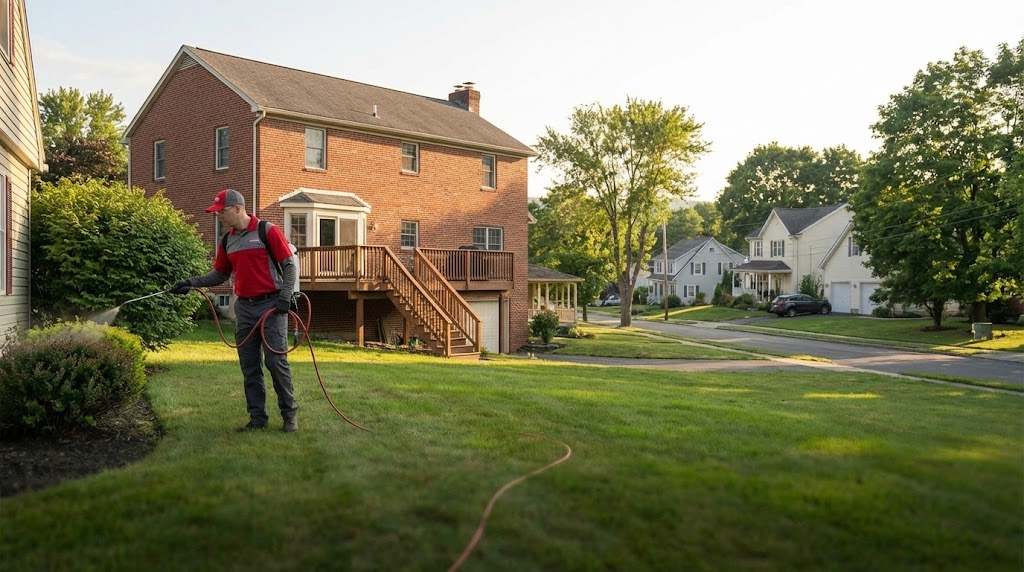
Landscaping changes reduce tick habitat, but they do not eliminate ticks that are already present. For many Connecticut homeowners, a professional treatment for tick-prone properties is the next logical step. These treatments target the areas where ticks live, including the edges, the leaf litter, and the stone walls. A good program addresses the whole property, not just the lawn, and it is timed to hit ticks when they are most active.
The specifics of what a treatment includes depend on the property and the company. Some treatments use granular products applied to the lawn, while others use liquid sprays on vegetation and along borders. The important thing is that the treatment covers the places where ticks actually hide, not just the visible grass. A thorough treatment for tick-prone properties will include the wooded edge, the shaded garden beds, and the areas around sheds and wood piles.
What to expect from a treatment program
Most residential tick control programs start in early spring, before the nymphs become active, and continue through the fall when adult ticks are looking for a host. The number of applications varies, but a typical schedule includes three to four visits per year. The first application targets the overwintered adults, the second covers the nymphs in late spring, and the third addresses the summer activity. A late‑fall application can reduce the number of adults that survive into the next season.
The products used are chosen to be effective while minimizing impact on beneficial insects. Many treatments now use synthetic pyrethroids that break down quickly in sunlight, or natural options such as cedar oil or fungal spores. The choice depends on the property, the severity of the tick population, and the homeowner's preferences. A professional will inspect the yard first, identify the problem areas, and design a plan around them.
Putting it together for your yard
Tick management in Connecticut is not a single action but a combination of habits. Clearing leaf litter, keeping grass short, managing the edges, storing wood properly, and discouraging deer all reduce the places where ticks can thrive. Adding a professional treatment program gives a layer of control that landscaping alone cannot provide. And personal inspection remains the final check that catches what the other measures miss.
The yards that have the lowest tick activity are the ones where the homeowner pays attention to the details. The borders are maintained, the debris is removed, and the treatment is applied on schedule. It is not about eliminating every tick, it is about shifting the balance so that the risk is much lower and the yard is safer to enjoy.